Experiencing East and West





Alum Funds Graduate Fellows at Northeastern Vancouver
When Julian Wong, E’72, arrived in Boston from Hong Kong, he carried more than a suitcase. He carried curiosity, ambition—and the quiet determination of a student willing to cross cultures in pursuit of opportunity.
More than five decades later, Wong’s journey has come full circle, culminating in a transformative $500,000 gift to Northeastern University’s Vancouver campus, the largest in its history.
Through the Liu Kuo–Chun Educational Foundation, Wong’s gift supports graduate fellows—particularly students who have studied in, or are deeply interested in, China and Hong Kong. The goal is simple but powerful: to give students the same life-changing exposure to East–West perspectives that shaped his own career.
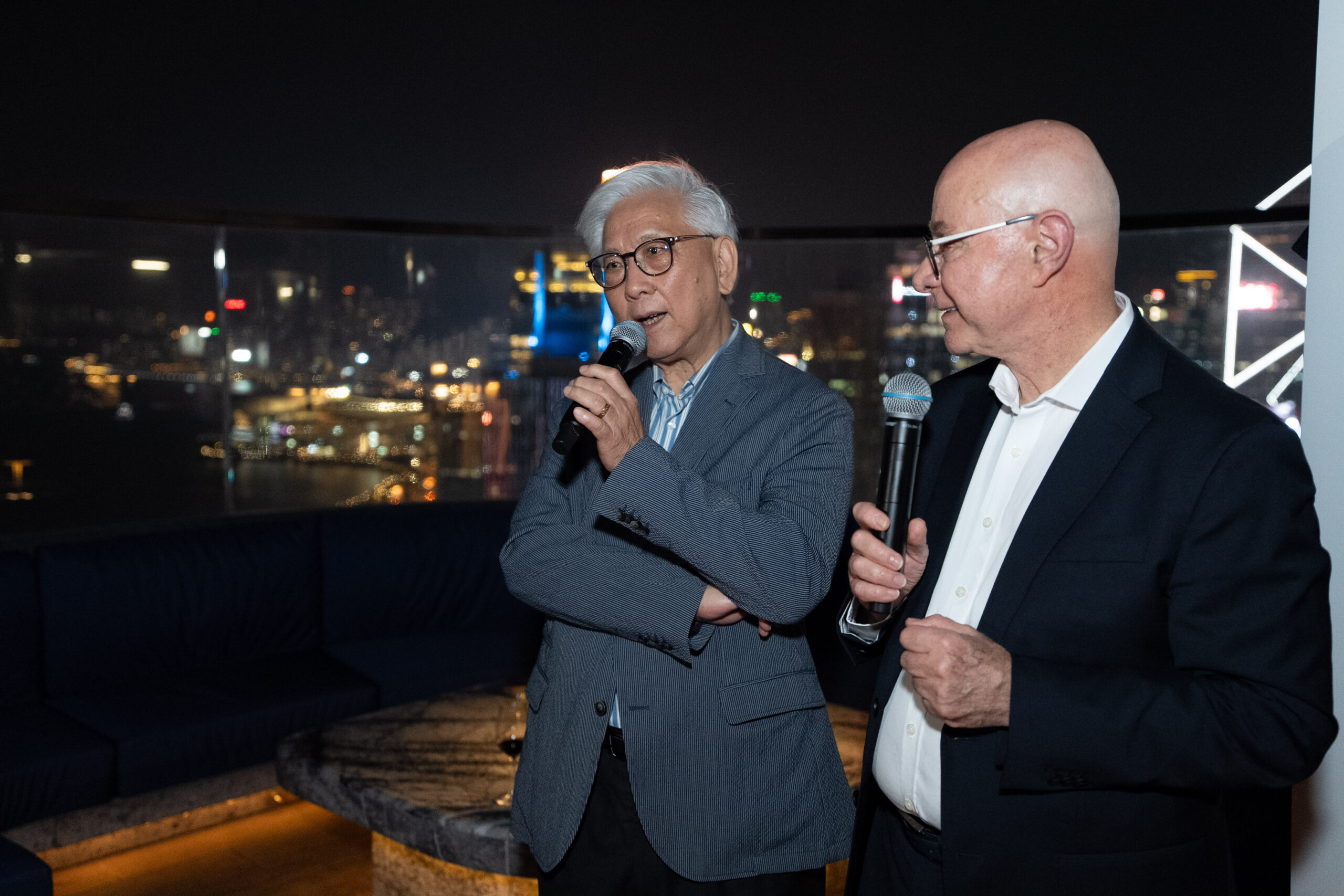
“We’re deeply grateful for Julian’s generous gift and his visit to our campus in Vancouver to meet with students and share his story. His story of determination and adventure resonates even more today,” said Steve Eccles, regional dean and CEO of Northeastern’s Vancouver campus.
Eccles said the gift will continue to inspire and support Northeastern students going forward. “Our students choose Northeastern with ambitions to develop their own global perspective, and Julian couldn’t be a better role model,” he said.
A catalog that changed everything
Wong’s Northeastern story began almost by accident. In Hong Kong in the mid-1960s, his older brother was collecting college catalogs while deciding where to study abroad.
“Luckily, he left all the catalogs at home after he decided to go to Canada in 1966 for university studies,” Wong recalled with a laugh.
Leafing through the brochures, Wong was struck by Northeastern’s cooperative education program. The idea of alternating classroom learning with real-world experience resonated—and ultimately set his course. He enrolled as a chemical engineering major and arrived in Boston in 1967. He was thousands of miles from home.
Like many first-year students, Wong had to adjust quickly—not only to academics, but to adult life. Laundry, cooking, navigating roommates, and learning how to communicate across cultures became part of his daily education.
“It was a bit challenging at first,” he said. “I was far from my family, immersed in American culture.”
To build a community, Wong and a friend—supported by a Northeastern grant—co-founded the NU Chinese Student Club. They welcomed students from across Greater Boston, organizing movie outings, social mixers, and lectures that created a support network far from home.
Lessons learned on co-op—and beyond
Wong deliberately chose co-ops that exposed him to different industries and work environments. His placements ranged from laboratory research at W.R. Grace in Cambridge, to operations and hospital research at Johnson & Johnson in New Jersey, to water treatment analysis at engineering firm Stone & Webster in Boston.
But some of the most enduring lessons weren’t technical.
At W.R. Grace, Wong once asked a secretary for scissors to open a box. When he returned them, he handed them back to her sharp-end first.
“She mildly scolded me and said, ‘That is not the way.’ It taught me a good lesson,” he said.
Another unforgettable moment came during a road trip from Boston to New Jersey in his secondhand car. After stopping for dinner in New York City’s Chinatown, Wong returned to find his suitcase ransacked. Soon after, a dashboard warning light flashed.
“Not long after that, the engine busted,” he recalled, laughing. “What a night I had.”
Co-op as a career compass
Those experiences proved pivotal. After earning his Northeastern degree, Wong pursued an MBA at Boston University, graduating in 1974—just as rising oil prices pushed the U.S. toward recession.
While he had the option to join his father’s garment business in Hong Kong, Wong saw opportunity elsewhere. Canada, rich in natural resources and exporting oil to the U.S., offered stability. He secured a position at Imperial Oil, now majority-owned by Exxon Mobil.
“I have no doubt the co-op experience significantly helped me land that first job,” Wong said. “It was just a couple of months before I graduated.”
Today’s graduates face similar uncertainty, he noted.
“We’re seeing tight job markets again in the U.S. and China,” Wong said. “Now, it’s driven largely by technology-related job displacement.”
Coming home, looking forward
In 1988, Wong returned to Hong Kong at his father’s request to help restructure the family textile and garment businesses, shifting it toward new investment opportunities.
“It was challenging, but rewarding,” he said. “My career at Imperial Oil was promising, and my children were young—it was a major cultural shift from West to East.”
Today, Wong serves as executive director at South Enterprise Holdings Ltd., a family office with investments in real estate, private and public portfolio investments. Throughout his life, he has bridged cultures, industries, and continents.
That balance—between East and West—is what he hopes to pass on.
“I learned sound Western business practices at Northeastern and gained so much from living in a different culture,” Wong said. “I want to help other students do the same, so they can expand their horizons.”
To learn more about creating opportunities for Northeastern students, visit give.northeastern.edu.

Julian Wong with his family: (front row) Julian Wong and his wife, Vicky Wong (back row, left to right) son, Jeremy Wong, and daughter, Ingrid Wong.
This article was written by Jennifer Nejman Bohonak.
experience more


